Gamewright Studio
Everything in the Studio
A desktop app for macOS, Windows and Linux, built on Godot, where you make a game by saying what you want and approving what the Director proposes. Here is each part of it and what it does.
The Studio
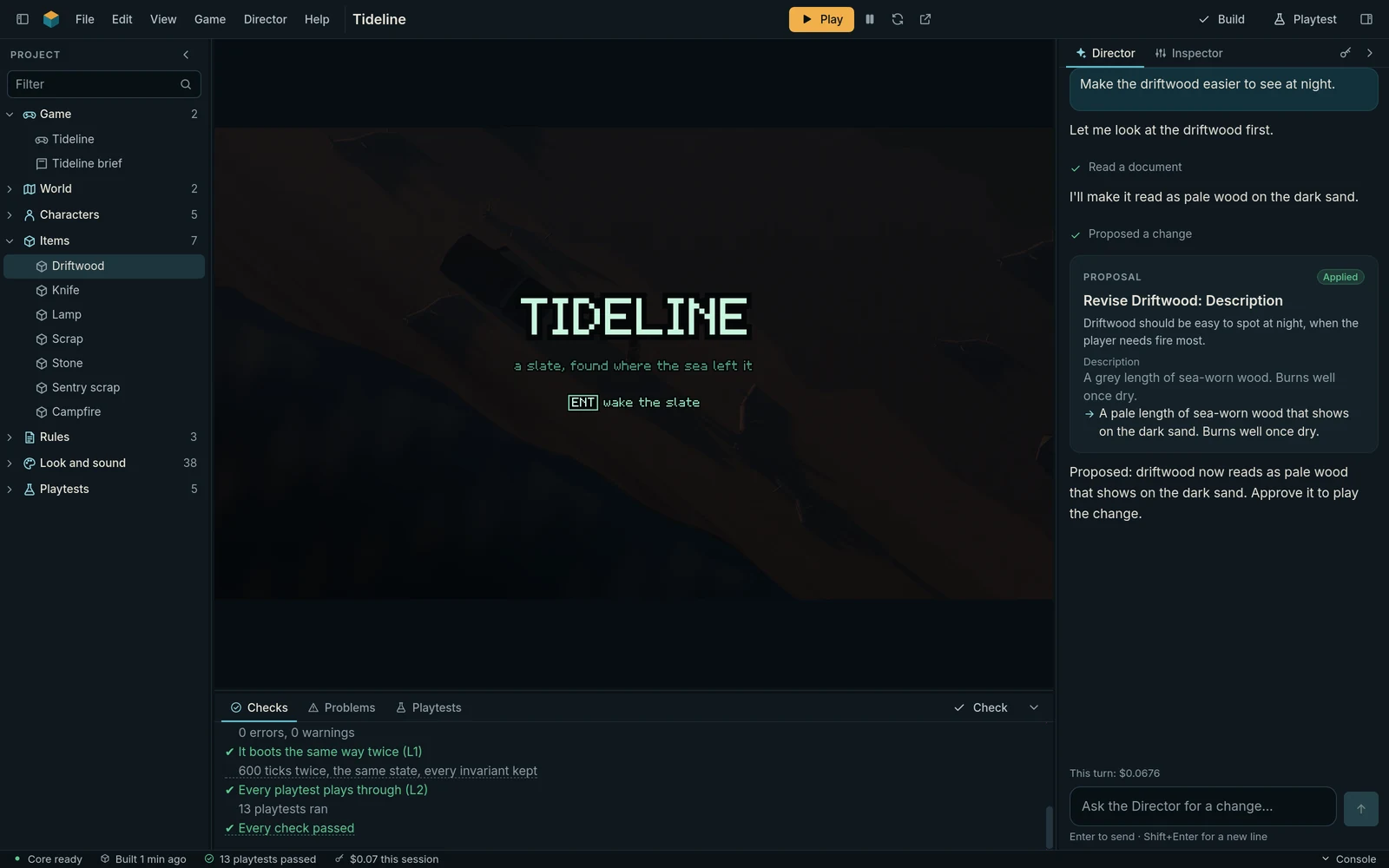
Your game’s documents on the left, the game playing in the middle, the checks below, and the Director on the right.
- Documents listed the way you think of a game: its world, characters, items, rules, look and sound, playtests. Names, never file paths or ids.
- The game plays inside the Studio on the same engine it ships on. Click it to play; click outside and the keys come back to you.
- Check, Build, Playtest and Play, each one click, each result said in plain words.
- A pro tool’s habits: panels that fold away, drag to any size and are remembered, menus with every command and its key, every key on a sheet (Ctrl+/), and Ctrl+K to find a document, a section or a command.
- Start a game from a template’s starter that plays at once, from one of the ten games, or from an empty folder the Director fills. The games you opened are a click away, and each opens on its next steps: build it and play it, playtest it, ask the Director.
- Change any document by hand: its fields in plain words, each in the control it needs, with its range and what it is for. Each change is yours, checked as you make it, and Ctrl+Z takes it back.
- Lists too: tags, a recipe’s inputs, a level’s parts, each item added or taken out in place. What the Director proposes shows under the field it would change, with Approve and Reject right there.
- Paint a level on a canvas, as the game draws it. Export a game as one zip for Linux, Windows, macOS or the web that anyone can play, with nothing else to install.
The Director
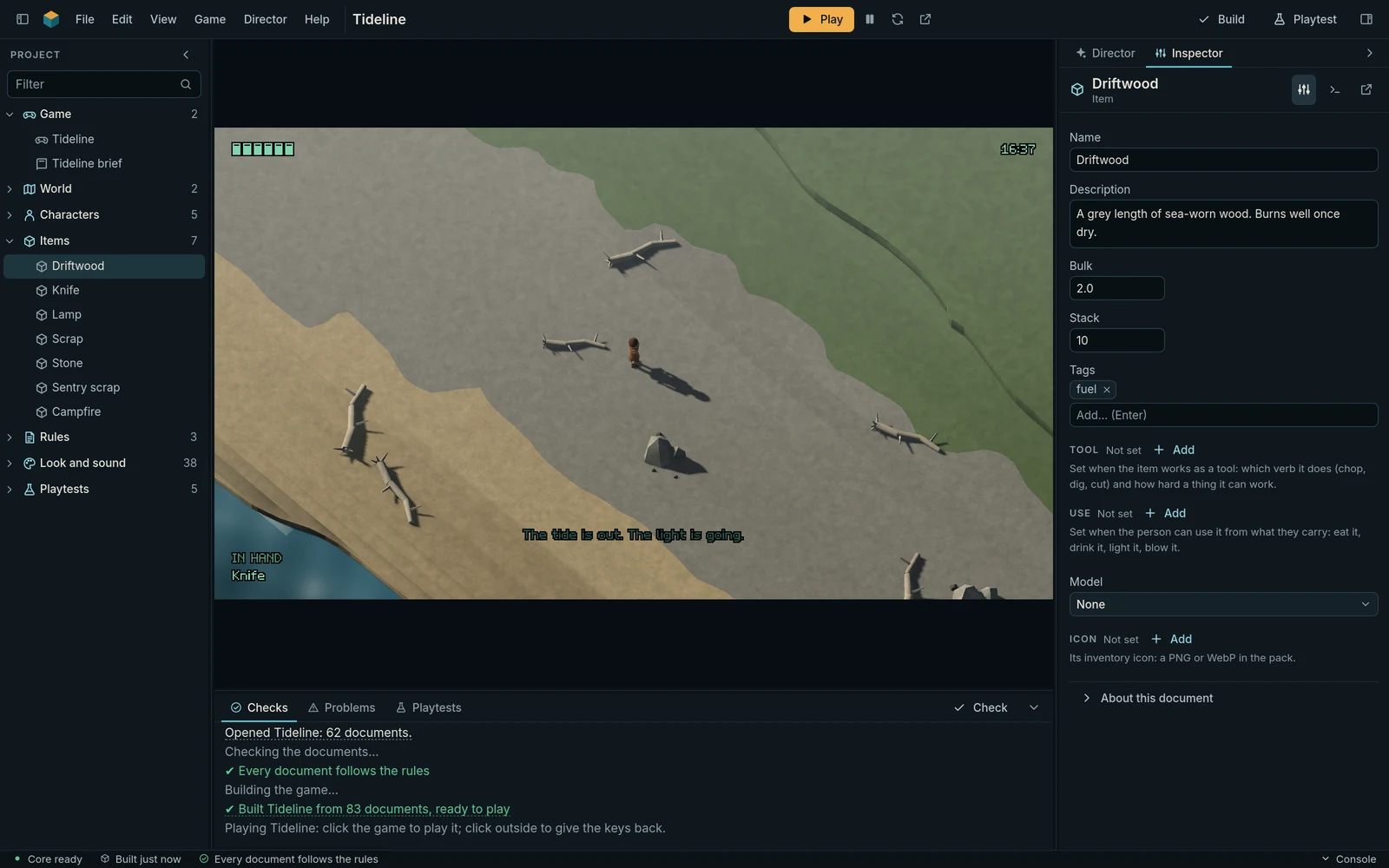
An AI that writes your game as documents, never as code, and only through proposals you decide on.
- Ask in plain words. Its answer streams in, with each step it takes.
- Each proposal says what changes from what to what, why, and whether every check still passes, before you are asked.
- Approve and the game rebuilds and plays; reject and nothing moves. Every change can be undone.
- It runs on your own Anthropic key, kept in your system’s keychain, and each turn shows what it cost.
- Or connect your own Claude Code with one command: its proposals show in the Studio the same way.

Six templates, ten games
A template is a genre the engine already knows how to play: its rules, its controls, its screens, its bots. A game pins one and changes what it needs. Each has a starter: the smallest game on it, playable the moment you make it, in its sample’s look and sound, and checked to L2 like every game here.
Action survival
One place seen from above through a day and a night: gather, make, carry a light, and beat what hunts you by reading it.
Starter: Ember Shore. Tideline's coast at half the size: gather, make the fire, light the lamp as night comes.
Top-down adventure
A village with people to talk to, a quest given in words, a wild place with things that hunt you, and the way back to finish it.
Starter: Windfall. Thornwick's village: fetch the bell the wind knocked down.
2D platformer
Run and jump through levels a generator lays out, each shipped with the route that proves it can be finished.
Starter: Meadow Run. Burrow Run's meadow: run, jump the spikes, reach the flag.
Grid puzzle
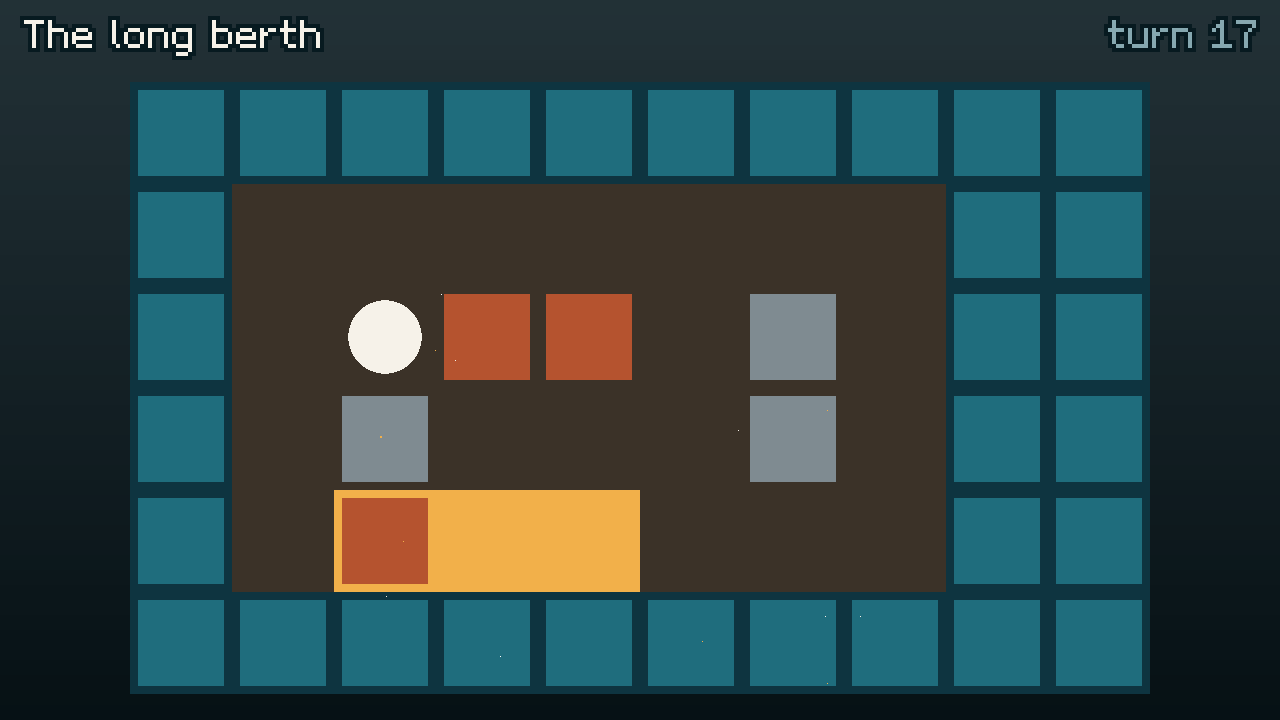
Push things onto targets, turn by turn. A solver proves every level can be won before it ships.
Starter: Harbour Push. Two crates on one of Pier Pressure's docks, where the order of pushes is the puzzle.
Twin-stick arena
One stick moves, the other aims and shoots. Waves come through the gates; a short run ends in a win or a loss.
Starter: Salt Pan. Saltwell's well held through three short waves.
Visual novel
A story read a line at a time over painted scenes, with choices that branch it and more than one ending.
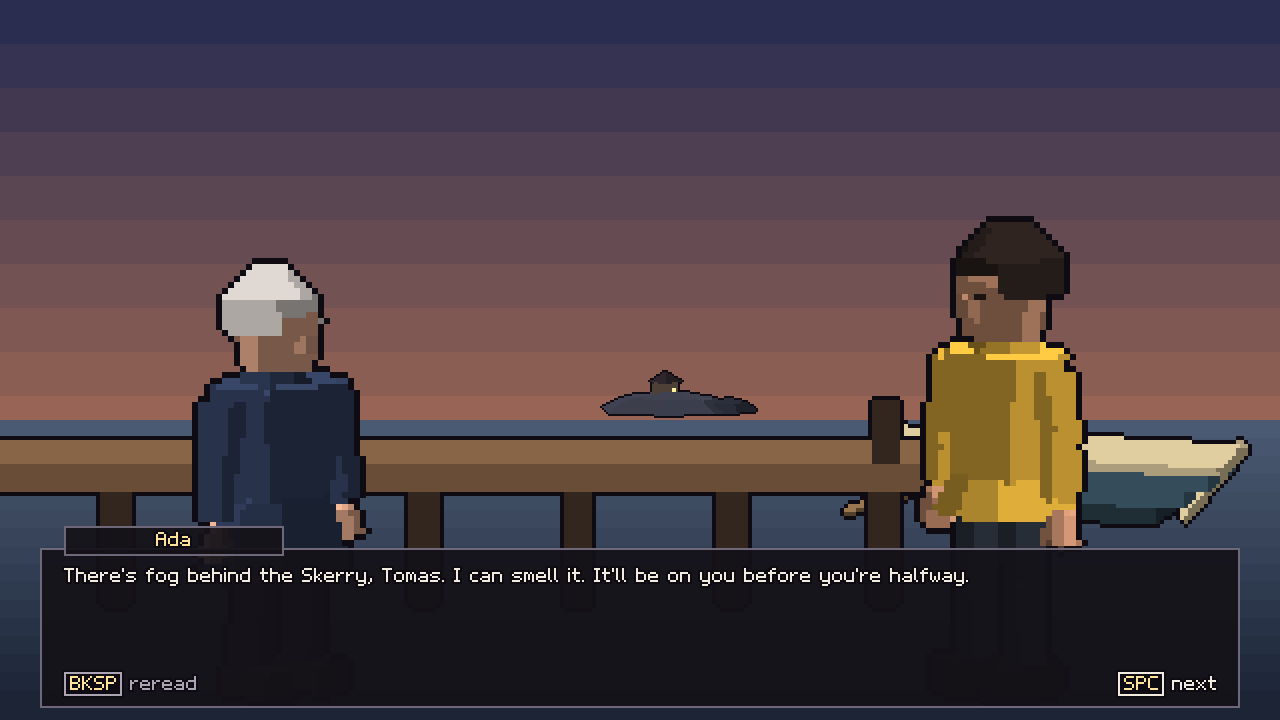
Starter: Before the Fog. One evening in Fog Signal's look: a choice, a flag, two endings.
Games as data
A game is a folder of small JSON documents, a Game Pack, that you can read, diff and keep in git. Every document has a schema; the whole game is checked as one.
- No scripts: the player loads documents and media only, so a game is safe to host and cheap to ship.
- Deterministic builders make worlds, models, sounds and music from recipes, pinned by a hash.
- When a game needs something new, the engine grows a reviewed kit every game can use. No game forks the engine.
- Lock the parts you like; the Director works on the rest.
The shape of a game
A Game Pack is a genre template plus small JSON documents. Deterministic builders turn it into a world, models and sound; new mechanics grow the engine as kits, so the engine stays one program every game shares.
my-game/
  game.json        template, seed
  theme/ styles/   fiction, look
  archetypes/      entities
  brains/ rules/   behavior
  worlds/ biomes/  generators
  models/ sounds/  recipes
  ui/ input/ camera/
playtests/ what "done" meansReadable
A game is a folder of documents you can read, diff and keep in git. Lock the parts you like; the Director reworks the rest.
Checkable
Schemas and semantic checks run before anyone plays. A validator isn't a playtest, so every game also carries playtests.
Replayable
A fixed-tick simulation, seeds by name and input keyed to the tick. Bots, saves and bug reports replay exactly.
Growable
When a game needs something new, the engine gains a reviewed kit that every game can use. No game forks the engine.
Web first
Every game has to run and look right in a browser. Desktop may add to that, never differ from it.
Offline first
With no network and no API key, built-in builders make the models, sounds and music from recipes.
Proof, not promises
Nothing is called done until it has been played: by bots, in frames, in a browser, then by you. The ladder runs from L0 (the documents follow the rules) to L5 (the web build ends in the desktop’s exact state).
Tideline, the first game, was written by hand to prove the engine could run a game from data alone. What it proved, automatically:
- The same seed makes the same world, on desktop and in the browser.
- Editing a generator changes the world stamp, and an old save is refused by name.
- A proof tour plays from the title with no cheats: gather, build the fire, survive the night, win the fight, save and load.
- Tactics beat stats: a bot that dodges wins at least 80% of 20 seeded fights; one that trades blows loses.
- A lamp at night gets you noticed from further away than crouching in cover.
- The web build boots in headless Chromium, has sound after the first key, and keeps its save.
The engine under it
Godot 4.7, with one player for every game on desktop and in the browser.
- A fixed-tick simulation with seeds by name: bots, saves and bug reports replay exactly.
- Generated worlds from height tables and biomes, with every named place proven reachable.
- Models built from recipes, pixel-art sprites that move, music written as a score.
- Touch controls made from each game’s own controls, so every game plays on a phone.
- Readable game text checked at phone size: nothing clipped, nothing too small.
- Looks right in Godot’s Compatibility renderer, so it runs on modest hardware and WebGL 2.
From the engine
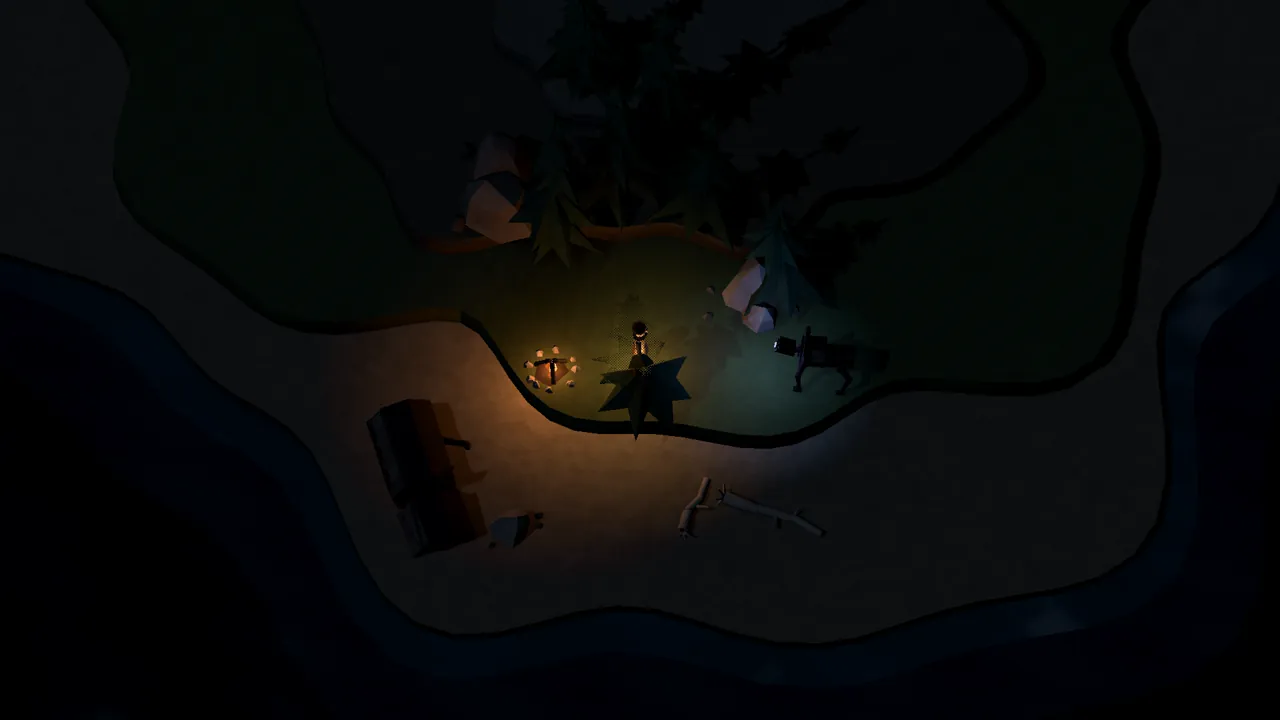
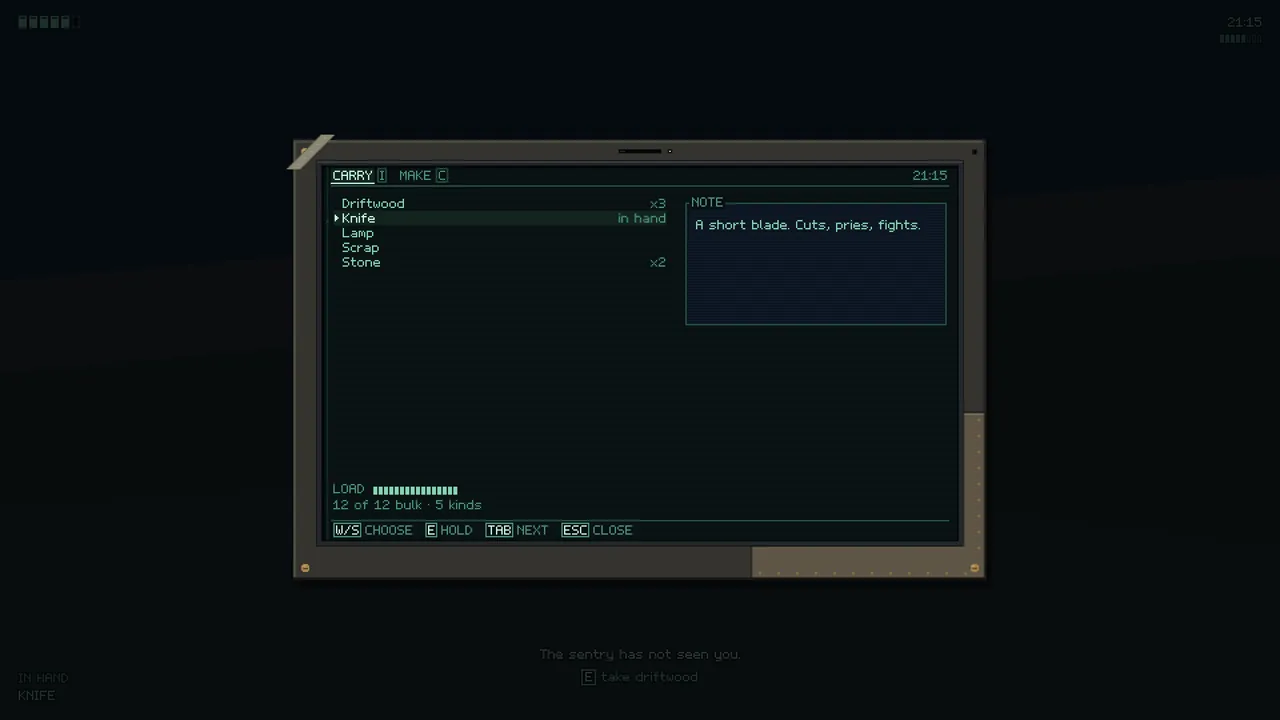
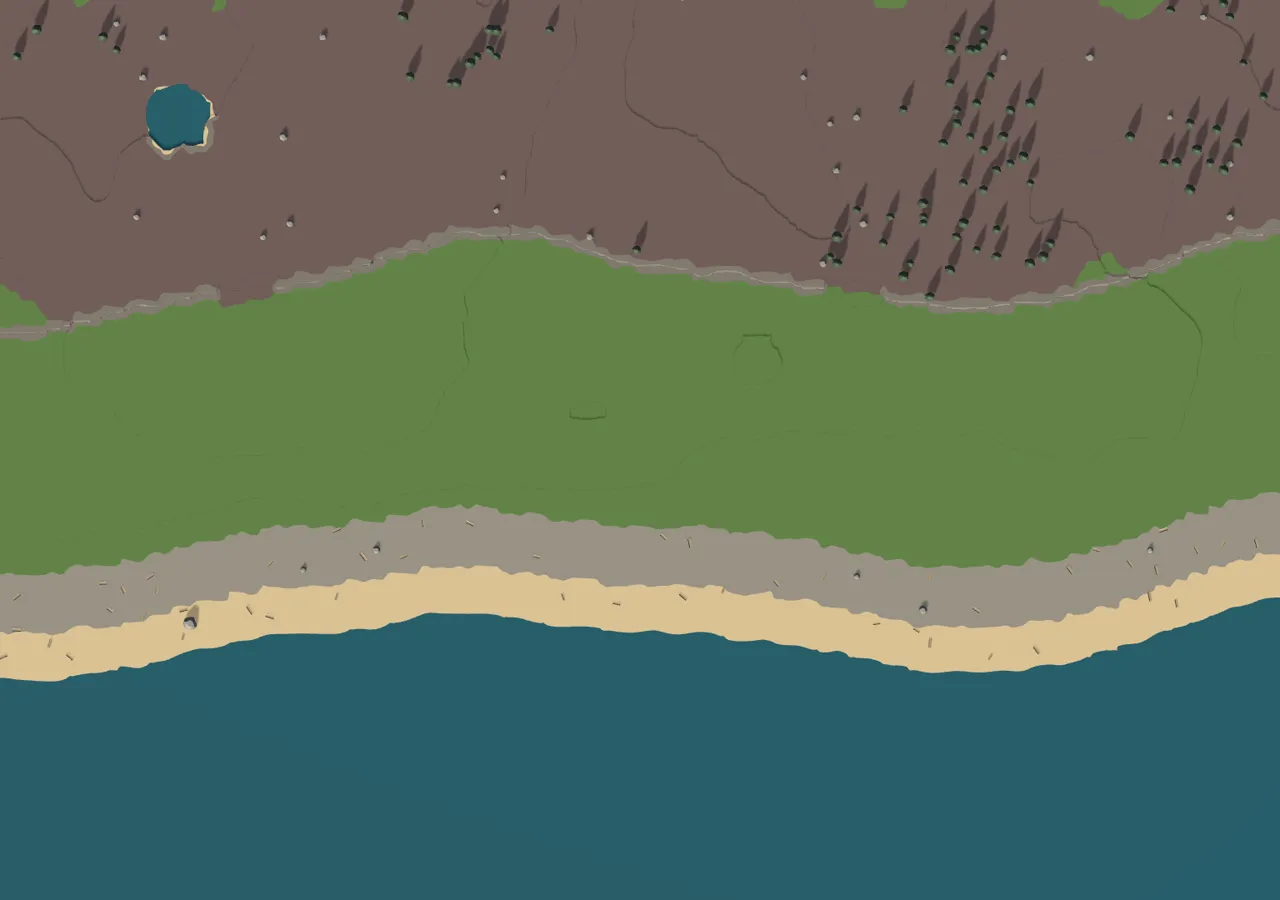
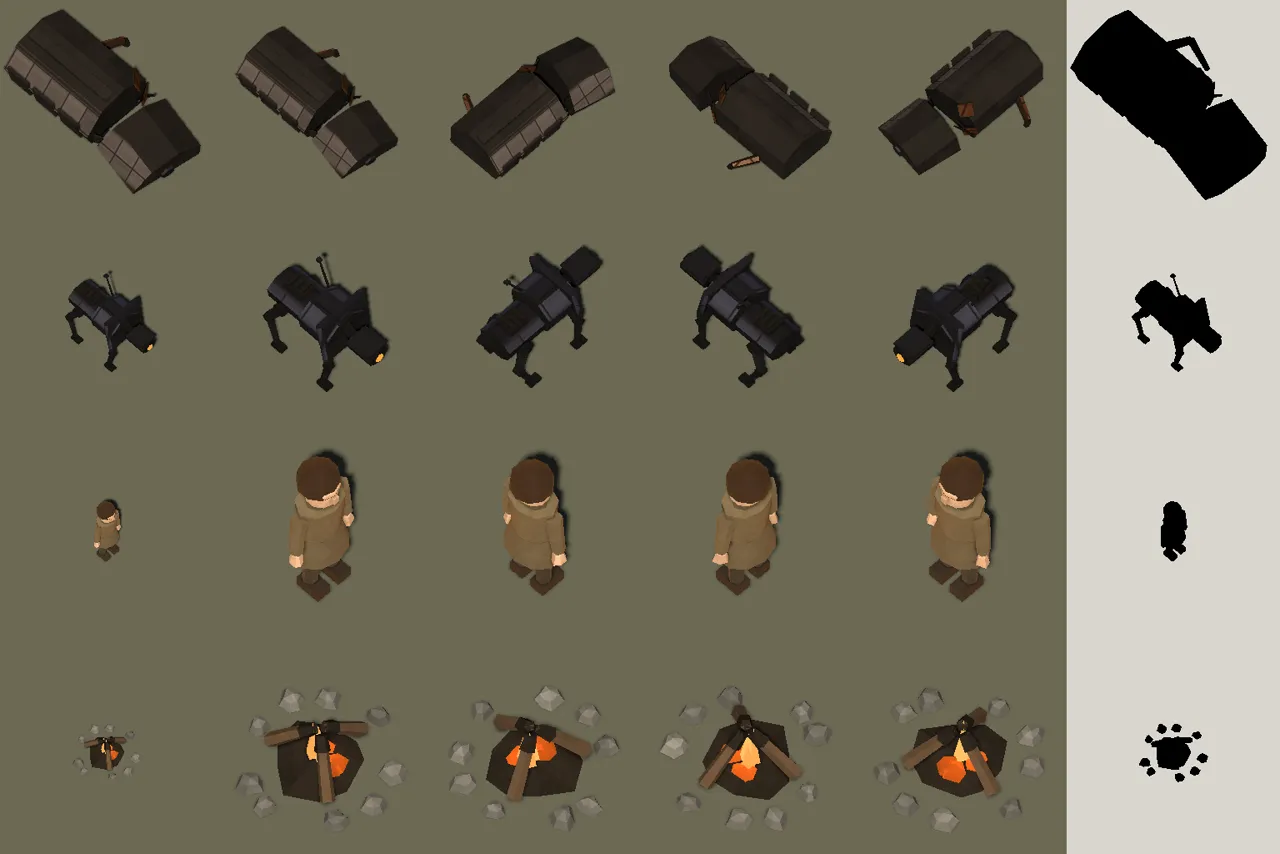
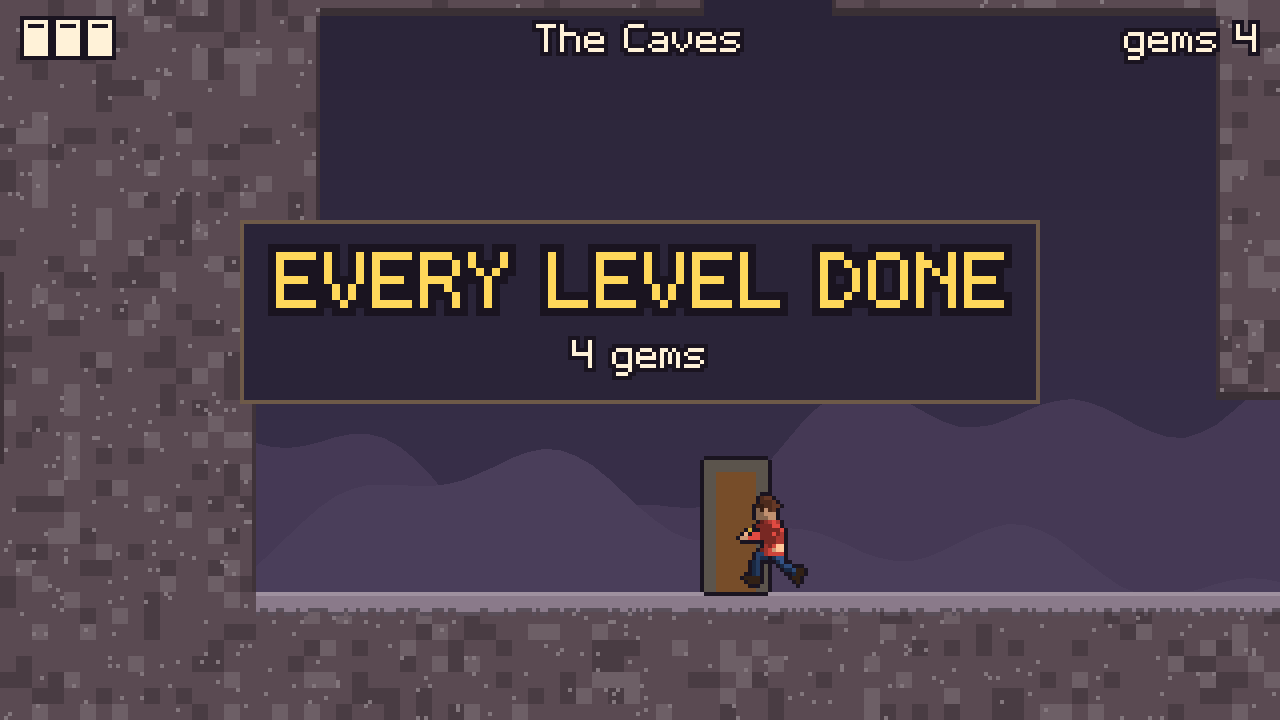
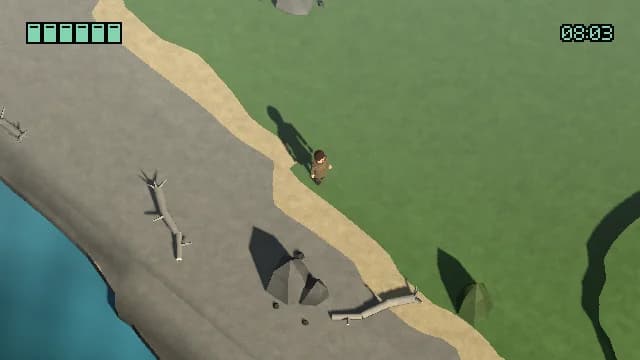
Real frames, rendered offscreen by the engine’s own checks. The same frames render byte for byte the same on every run.
Where it runs
macOS, Windows and Linux
One executable is both the Studio and the engine its core runs, proven on all three systems to reach the same game state. Download it for yours.
Your games, anywhere
Games play in any modern browser and on phones. Export your own from the Studio as one zip for the web, ready for itch.io or your own site, or for each desktop system.
The Studio on the web
The same Studio at gamewright.diy/app, behind sign-in with a code sent to your email, by invitation for now. It plays, checks and directs your games in the page.